
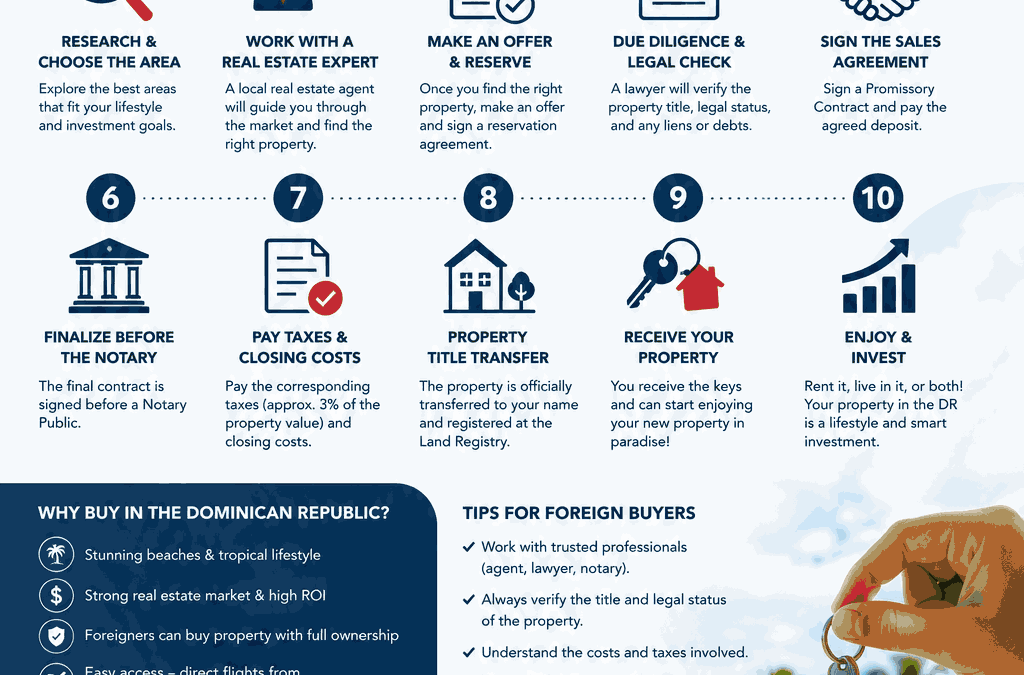
The Dominican Republic has become one of the most attractive real estate markets in the Caribbean for foreign investors. With strong tourism growth, dollar-based rental income, and relatively simple property laws for foreigners, buying real estate here—especially in areas like Punta Cana, Bávaro, and Cap Cana—can be a highly profitable investment.
This guide explains how to buy property in the Dominican Republic step by step, including legal requirements, costs, risks, and expert tips to help you make a safe and profitable investment.
Why Invest in the Dominican Republic Real Estate Market?
Before understanding the buying process, it’s important to know why this market is so attractive.
Strong Tourism Demand
The Dominican Republic receives millions of tourists every year, especially in Punta Cana, creating constant demand for:
- Vacation rentals
- Airbnb properties
- Luxury villas
- Beachfront condos
Foreign Ownership is Allowed
One of the biggest advantages is that foreigners can buy property with full ownership rights, the same as locals.
There are no restrictions on:
- Property ownership
- Repatriation of profits
- Rental income in USD
High Rental Returns
In tourist zones like Punta Cana, investors can achieve:
- High occupancy rates
- Strong nightly rental prices
- Dollar-based income
Growing Real Estate Value
Areas like Cap Cana and Bávaro continue to grow due to:
- New luxury developments
- Infrastructure improvements
- International demand
Step-by-Step: How to Buy Property in the Dominican Republic
Step 1: Define Your Investment Goal
Before searching for properties, determine your strategy:
- Airbnb short-term rental
- Long-term rental
- Vacation home
- Luxury investment property
This will help you choose the right location and property type.
Step 2: Choose the Right Location
Location is the most important factor in real estate success.
Top Investment Areas:
- Punta Cana
- Cap Cana
- Bávaro
- Downtown Punta Cana
- Cocotal Golf & Country Club
- Cana Bay
- Los Corales
Each area offers different ROI potential and target audiences.
Step 3: Work with a Trusted Real Estate Agent
A local expert helps you:
- Avoid legal risks
- Identify high-performing properties
- Negotiate better prices
- Understand market value
Always choose an agent with experience in foreign investment and tourism properties.
Step 4: Legal Due Diligence
Before buying any property, a lawyer should verify:
- Property title (Titled land vs concession)
- Ownership history
- Debts or liens
- HOA regulations
- Construction permits (for pre-construction projects)
This step is essential to avoid legal issues.
Step 5: Make an Offer & Reservation
Once you select a property:
- Submit an offer
- Sign a reservation agreement
- Pay a deposit (usually $2,000–$10,000 depending on property)
This secures the property while legal checks continue.
Step 6: Purchase Agreement (Promise of Sale)
A formal contract is signed outlining:
- Final purchase price
- Payment schedule
- Delivery date
- Legal conditions
At this stage, typically 10%–20% is paid.
Step 7: Final Payment & Closing
The final transaction is completed in front of a notary.
You will:
- Pay remaining balance
- Sign final deed
- Transfer ownership
The property is officially yours after registration.
Step 8: Title Registration
Your lawyer registers the property with:
- Land Registry Office (Registro de Títulos)
This ensures legal ownership protection.
Costs When Buying Property in the Dominican Republic
Understanding additional costs is crucial for budgeting.
Closing Costs
Typically include:
- Legal fees: 1% – 1.5%
- Transfer tax: 3% of property value
- Notary fees
- Registration fees
Maintenance Fees (HOA)
If buying in a gated community:
- Monthly or annual HOA fees apply
- Covers security, maintenance, amenities
Property Management (Optional but Recommended)
For Airbnb investors:
- 15%–30% of rental income
- Includes cleaning, guest communication, maintenance
Taxes for Property Owners
The Dominican Republic offers a relatively investor-friendly tax system.
Property Tax (IPI)
- Applies only if property exceeds a certain value threshold
- Around 1% annually on excess value
Rental Income
- Taxable depending on structure
- Many investors optimize through legal entities
Common Mistakes to Avoid
Many foreign investors lose money due to avoidable errors:
- Skipping legal due diligence
- Buying off-plan without reputable developers
- Ignoring HOA fees
- Underestimating maintenance costs
- Choosing wrong location for Airbnb strategy
Best Property Types for Investment
1. Beachfront Condos
- High Airbnb demand
- Premium nightly rates
2. Luxury Villas
- Ideal for Cap Cana
- High-end tourists
3. Golf Community Apartments
- Stable occupancy
- Family travelers
4. Pre-Construction Projects
- Lower entry price
- High appreciation potential https://shre.ink/3ksb
Can Foreigners Buy Property in the Dominican Republic?
Yes. Foreigners have the same property rights as locals, including:
- Full ownership title
- Ability to sell freely
- Ability to rent short or long term
No residency is required to purchase property.
Why Punta Cana is the Best Area for Investment
Punta Cana stands out due to:
- International airport
- Strong tourism industry
- Luxury resorts
- Year-round demand
- High Airbnb occupancy rates
It is currently the most active real estate market in the country.
ROI Expectations in Dominican Republic Real Estate
Depending on location and property type:
- Luxury properties: 6%–10% annually
- Airbnb properties: 8%–15%+ annually
- Pre-construction appreciation: 20%–40% potential
Comentarios recientes